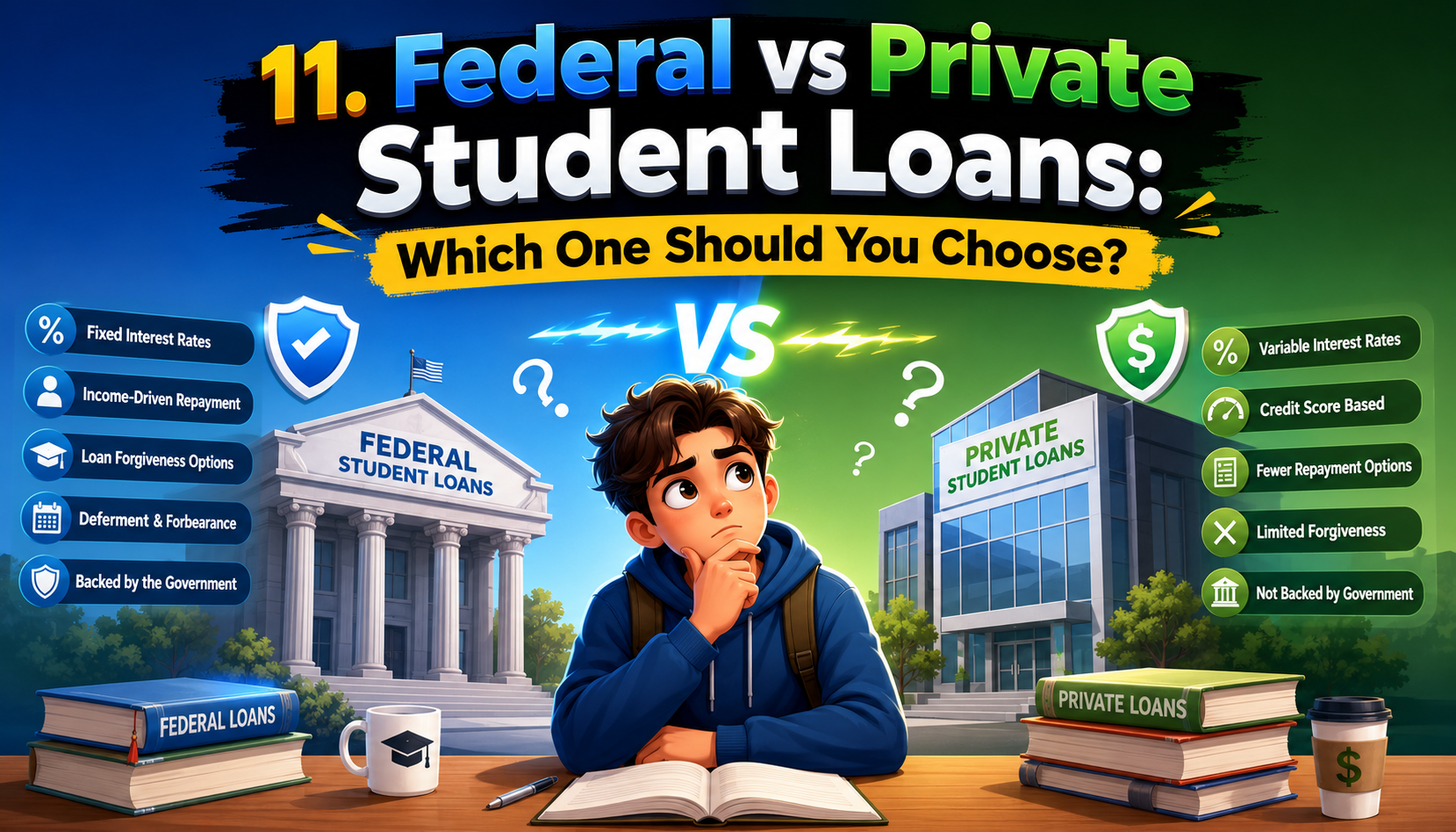
Student loans can make college possible, but choosing the wrong debt may create years of unnecessary interest and limited repayment options. Most students face two choices: federal loans issued through the U.S. Department of Education and private loans offered by banks, credit unions, state agencies or online lenders.
The decision should not be based only on the lowest advertised rate. Borrowers must compare credit requirements, repayment flexibility, fees, cosigner responsibility and protections available when income falls. For most undergraduates, federal loans are the safer starting point. Private financing may become useful after grants, scholarships, savings and federal loans have been considered.
The decision should not be based only on the lowest advertised rate. Borrowers must compare credit requirements, repayment flexibility, fees, cosigner responsibility and protections available when income falls. For most undergraduates, federal loans are the safer starting point. Private financing may become useful after grants, scholarships, savings and federal loans have been considered.
The Difference in One Minute
How Federal Student Loans Work
Students access federal aid by completing the Free Application for Federal Student Aid. The school uses that information to prepare an aid offer. Direct Subsidized Loans are for eligible undergraduates with financial need, and the government generally pays interest during qualifying in-school and deferment periods. Direct Unsubsidized Loans are available to eligible undergraduate and graduate students, but interest begins accumulating after disbursement. PLUS loans are for graduate students and parents of dependent undergraduates and require an adverse-credit review.
Federal rates for loans first disbursed from July 1, 2026, through June 30, 2027:
- Undergraduate Direct Subsidized and Unsubsidized Loans: 6.52%
- Graduate or professional Direct Unsubsidized Loans: 8.07%
- Parent and Graduate PLUS Loans: 9.07%
Why Federal Loans Usually Come First
Federal Direct loans generally do not require a cosigner or traditional credit approval, except PLUS loans. They may also provide access to income-driven repayment, deferment, forbearance, discharge provisions and qualifying forgiveness programs. These features can matter when a borrower loses employment, develops a disability or enters a lower-paying public-service career. Private lenders are not required to provide the same relief.
Federal borrowing has limits. A dependent undergraduate can generally borrow $5,500 in the first year, $6,500 in the second year and $7,500 in the third year and beyond, with a $31,000 total undergraduate limit. Independent undergraduate limits are higher.
Federal borrowing has limits. A dependent undergraduate can generally borrow $5,500 in the first year, $6,500 in the second year and $7,500 in the third year and beyond, with a $31,000 total undergraduate limit. Independent undergraduate limits are higher.
How Private Student Loans Work
Private lenders evaluate credit history, income, debt and other underwriting factors. Students with limited credit often apply with a parent or creditworthy cosigner. The cosigner becomes legally responsible if the student does not pay, and missed payments can damage both credit records.
Private loans may have fixed or variable rates. Variable rates can change according to the agreement and market benchmark. The lowest advertised offers are generally reserved for strong applicants. Compare the annual percentage rate, fees, repayment term, in-school payment rules and cosigner-release policy—not only the headline rate.
Private loans may have fixed or variable rates. Variable rates can change according to the agreement and market benchmark. The lowest advertised offers are generally reserved for strong applicants. Compare the annual percentage rate, fees, repayment term, in-school payment rules and cosigner-release policy—not only the headline rate.
When a Private Loan May Make Sense
A private loan may be considered when the school’s remaining certified cost cannot be covered by savings, scholarships, work income, federal loans or a manageable payment plan. It may also appeal to a graduate student with excellent credit who receives a clearly lower fixed rate than the federal PLUS rate and expects to repay quickly.
That exception requires caution. A lower rate may not compensate for losing federal flexibility. The Consumer Financial Protection Bureau advises most borrowers to use federal options before private loans, while recognizing that certain highly creditworthy graduate borrowers may find a private offer competitive.
That exception requires caution. A lower rate may not compensate for losing federal flexibility. The Consumer Financial Protection Bureau advises most borrowers to use federal options before private loans, while recognizing that certain highly creditworthy graduate borrowers may find a private offer competitive.
Use This Borrowing Order
1. Free Aid
Use grants and scholarships first.
Use grants and scholarships first.
2. Personal Resources
Consider savings, earnings and tuition plans.
Consider savings, earnings and tuition plans.
3. Federal Loans
Accept subsidized loans before unsubsidized loans when offered.
Accept subsidized loans before unsubsidized loans when offered.
4. Private Loan
Borrow only the remaining verified gap.
Borrow only the remaining verified gap.
Questions to Ask Before Signing
- Is the rate fixed or variable, and what is the full APR?
- Must payments begin while the student is enrolled?
- What relief is available after unemployment or illness?
- Are there origination, late or returned-payment fees?
- Can the cosigner be released, and under what conditions?
- What is the total cost under the full repayment schedule?
Major warning: Refinancing federal loans with a private lender turns them into private debt. A lower rate may look attractive, but federal repayment plans and protections are lost permanently.
Which Option Fits Your Situation?
First-year undergraduate: Begin with FAFSA, grants and federal Direct loans. Limited credit may make private borrowing expensive or dependent on a cosigner.
Student with a tuition gap: Ask the financial-aid office about additional aid, payment plans and cost reductions before comparing private lenders.
Graduate student with excellent credit: Compare the fixed private offer with federal graduate and PLUS options, but place a real value on federal protections.
Future public-service worker: Federal loans are usually more suitable because private loans are not eligible for federal Public Service Loan Forgiveness.
Student with a tuition gap: Ask the financial-aid office about additional aid, payment plans and cost reductions before comparing private lenders.
Graduate student with excellent credit: Compare the fixed private offer with federal graduate and PLUS options, but place a real value on federal protections.
Future public-service worker: Federal loans are usually more suitable because private loans are not eligible for federal Public Service Loan Forgiveness.
Frequently Asked Questions
Do private loans require FAFSA?
Usually not, but completing FAFSA first is essential because it determines eligibility for federal grants, work-study and loans.
Can private loans have lower rates?
Yes, particularly for applicants with excellent credit or a strong cosigner. Compare the full APR and borrower protections rather than the starting rate alone.
Can I use both types?
Yes. A student may use federal loans first and a smaller private loan for the remaining certified education cost.
Which one is better overall?
Federal loans are usually the better first choice because of fixed rates, easier access and stronger protections. Private loans are best treated as a carefully compared gap-filling tool.
Final Decision
Choose the loan that remains manageable during a difficult future, not only the loan that appears cheapest today. Federal loans provide a standardized structure and protections that are difficult to replace. Private loans can provide extra funding and occasionally competitive pricing, but their terms depend heavily on credit.
Borrow the smallest amount necessary, estimate the monthly payment and read every condition before signing. Education can create long-term value, but the financing should support that future rather than restrict it.
Borrow the smallest amount necessary, estimate the monthly payment and read every condition before signing. Education can create long-term value, but the financing should support that future rather than restrict it.
Disclaimer: This article provides general educational information, not personalized financial advice. Rates, repayment programs and lender terms may change. Review official federal guidance and the complete loan agreement before borrowing.