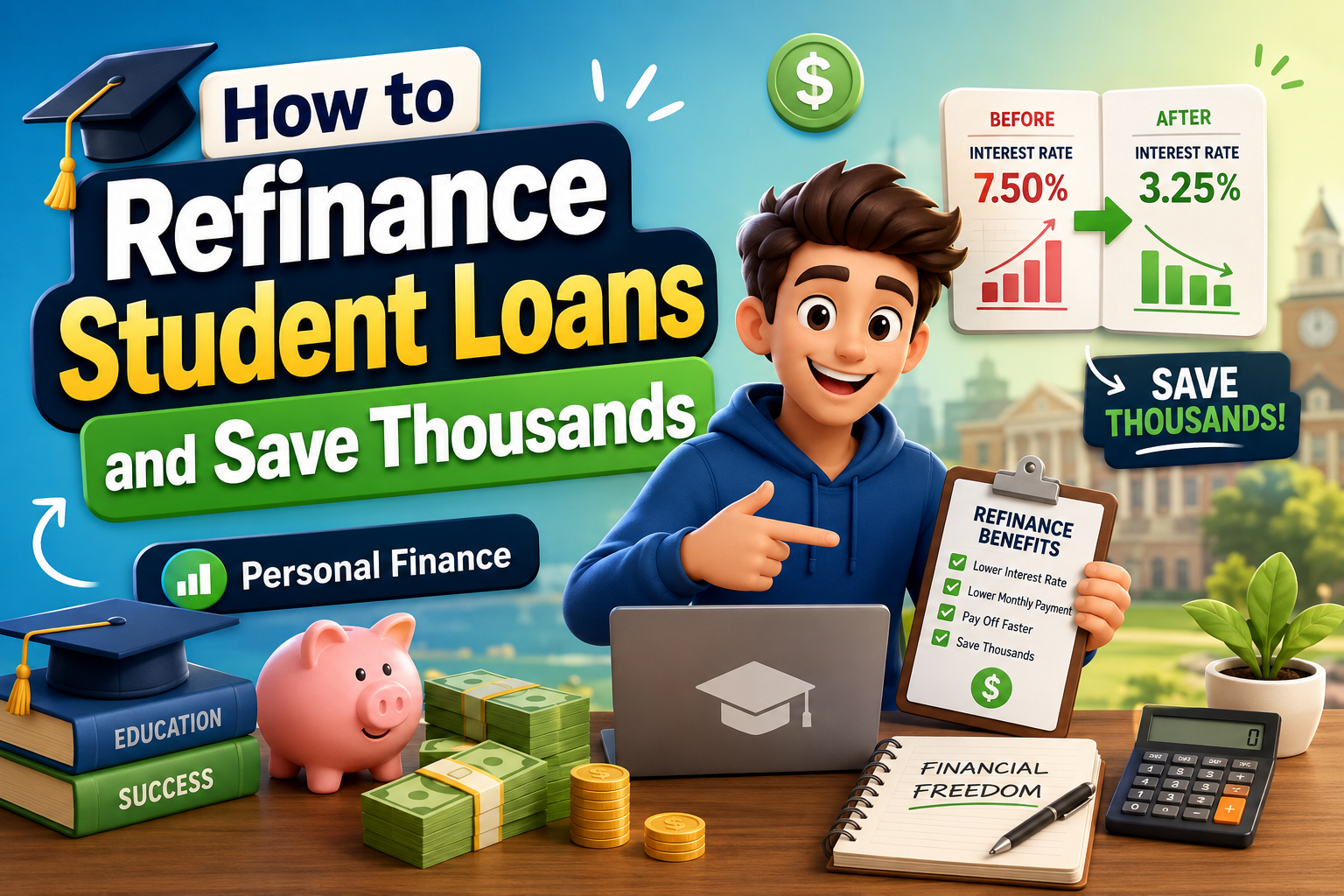
A lower interest rate can make a major difference.
Student-loan refinancing replaces one or more existing education loans with a new private loan. When the new loan has a lower interest rate, borrowers may reduce their monthly payment, pay less interest or become debt-free sooner. However, the lowest advertised rate is not automatically the best choice. Loan type, repayment term, credit strength and federal borrower protections must all be considered before signing.
Student-loan refinancing replaces one or more existing education loans with a new private loan. When the new loan has a lower interest rate, borrowers may reduce their monthly payment, pay less interest or become debt-free sooner. However, the lowest advertised rate is not automatically the best choice. Loan type, repayment term, credit strength and federal borrower protections must all be considered before signing.
What Student-Loan Refinancing Actually Does
During refinancing, a private bank, credit union or online lender pays off the selected student loans. You then repay the new lender under a new interest rate, term and monthly-payment schedule.
Borrowers may refinance one loan, several private loans or a combination of federal and private loans. Refinancing is different from federal Direct Consolidation. Federal consolidation combines eligible federal loans but generally uses a weighted-average fixed interest rate rather than offering a lower market-based rate. Federal loans cannot be refinanced within the federal student-aid system.
Borrowers may refinance one loan, several private loans or a combination of federal and private loans. Refinancing is different from federal Direct Consolidation. Federal consolidation combines eligible federal loans but generally uses a weighted-average fixed interest rate rather than offering a lower market-based rate. Federal loans cannot be refinanced within the federal student-aid system.
When Refinancing Can Save Money
Refinancing is usually most valuable when your current interest rate is significantly higher than the rate you can qualify for today. Borrowers may receive stronger offers after building credit, increasing income, reducing other debt or establishing a stable employment history.
Private-loan borrowers are often the strongest candidates because they are not giving up federal repayment programs. Refinancing may also help remove a cosigner when the new application qualifies without one, although approval and release rules depend on the lender.
Private-loan borrowers are often the strongest candidates because they are not giving up federal repayment programs. Refinancing may also help remove a cosigner when the new application qualifies without one, although approval and release rules depend on the lender.
Illustrative savings example
Suppose a borrower owes $40,000 at an 8% fixed rate with 10 years remaining. The monthly payment would be about $485, and total remaining interest would be approximately $18,237.
Refinancing the same balance to a 5.5% fixed rate for 10 years would reduce the payment to about $434 and total interest to approximately $12,093. The estimated interest saving would be more than $6,100.
This example is only an estimate and excludes lender fees, payment timing and other loan-specific factors.
Suppose a borrower owes $40,000 at an 8% fixed rate with 10 years remaining. The monthly payment would be about $485, and total remaining interest would be approximately $18,237.
Refinancing the same balance to a 5.5% fixed rate for 10 years would reduce the payment to about $434 and total interest to approximately $12,093. The estimated interest saving would be more than $6,100.
This example is only an estimate and excludes lender fees, payment timing and other loan-specific factors.
The Major Federal-Loan Warning
Refinancing federal student loans through a private lender is permanent. Once the private loan pays off the federal debt, the borrower generally loses federal protections connected to those loans.
These protections may include income-driven repayment, federal deferment and forbearance options, Public Service Loan Forgiveness and certain discharge benefits. A private lender may offer hardship assistance, but its policies are controlled by the private loan agreement and may be less flexible.
These protections may include income-driven repayment, federal deferment and forbearance options, Public Service Loan Forgiveness and certain discharge benefits. A private lender may offer hardship assistance, but its policies are controlled by the private loan agreement and may be less flexible.
Before refinancing federal debt, use the official federal repayment calculator to compare monthly payments, total repayment costs and possible forgiveness under available federal plans. A lower private rate may not compensate for losing valuable federal benefits.
Step 1: List Every Existing Loan
Create a simple record containing each loan’s balance, interest rate, monthly payment, remaining term and whether it is federal or private. Do not combine the loans mentally because a high-rate private loan may be worth refinancing while a lower-rate federal loan may be better left unchanged.
Also check whether each rate is fixed or variable. A fixed rate remains stable, while a variable rate can change with its reference index and cause future payments to rise.
Also check whether each rate is fixed or variable. A fixed rate remains stable, while a variable rate can change with its reference index and cause future payments to rise.
Step 2: Check Your Financial Profile
Private lenders commonly evaluate credit history, income, employment, monthly obligations and debt-to-income ratio. A stronger profile generally improves the chance of qualifying for a competitive rate.
Review your credit reports for inaccurate late payments, unfamiliar accounts or incorrect balances. Pay bills on time, reduce revolving credit-card balances and avoid opening unnecessary accounts immediately before applying. A borrower who cannot qualify independently may receive a better offer with a creditworthy cosigner, but the cosigner becomes legally responsible for the debt.
Review your credit reports for inaccurate late payments, unfamiliar accounts or incorrect balances. Pay bills on time, reduce revolving credit-card balances and avoid opening unnecessary accounts immediately before applying. A borrower who cannot qualify independently may receive a better offer with a creditworthy cosigner, but the cosigner becomes legally responsible for the debt.
Step 3: Define Your Main Goal
Lower monthly payment
A longer term may reduce the required payment but can increase total interest.
A longer term may reduce the required payment but can increase total interest.
Maximum interest savings
Choose a lower rate and the shortest term that fits your budget.
Choose a lower rate and the shortest term that fits your budget.
Faster payoff
Select a shorter term and continue making additional principal payments.
Select a shorter term and continue making additional principal payments.
Do not judge an offer only by its monthly payment. A lender can create a smaller payment by extending a 10-year balance across 15 or 20 years. This may improve immediate cash flow while increasing the amount paid overall. The CFPB advises borrowers to compare the annual percentage rate, repayment period and complete loan cost rather than focusing only on the payment.
Step 4: Compare Several Lenders
Request rate estimates from multiple reputable lenders. Compare fixed and variable rates, available terms, minimum-income requirements, late-payment rules, hardship options, cosigner-release policies and any origination or prepayment fees.
A fixed rate offers predictable payments. A variable rate may initially be lower but can increase later. Borrowers with a short payoff plan and strong financial flexibility may consider variable rates, while those wanting predictable long-term payments may prefer fixed financing.
Whenever possible, begin with lenders that offer prequalification using a soft credit inquiry. Confirm whether the final application requires a hard inquiry before proceeding.
A fixed rate offers predictable payments. A variable rate may initially be lower but can increase later. Borrowers with a short payoff plan and strong financial flexibility may consider variable rates, while those wanting predictable long-term payments may prefer fixed financing.
Whenever possible, begin with lenders that offer prequalification using a soft credit inquiry. Confirm whether the final application requires a hard inquiry before proceeding.
Step 5: Calculate the Real Savings
For each offer, compare the new total repayment amount with the remaining cost of your current loans. Include any fees and confirm whether the offered rate depends on automatic payments.
Some private lenders provide a small interest-rate reduction for direct debit. The CFPB notes that many lenders may reduce the rate by approximately 0.25 percentage points for enrolling in automatic payments, although the actual discount varies.
Some private lenders provide a small interest-rate reduction for direct debit. The CFPB notes that many lenders may reduce the rate by approximately 0.25 percentage points for enrolling in automatic payments, although the actual discount varies.
Step 6: Submit the Strongest Application
After comparing estimates, apply to the lender offering the best combination of cost, protections and flexibility. Be prepared to provide identification, proof of income, employment details, current loan statements and payoff information.
Continue paying the existing servicers until you receive confirmation that every selected balance has been fully paid. Refinancing does not excuse payments due while the new loan is being processed.
Continue paying the existing servicers until you receive confirmation that every selected balance has been fully paid. Refinancing does not excuse payments due while the new loan is being processed.
Mistakes That Can Eliminate Your Savings
- Refinancing federal loans without reviewing forgiveness eligibility.
- Choosing a longer term only because the payment looks smaller.
- Accepting a variable rate without understanding future increases.
- Applying with the first lender without comparing alternatives.
- Ignoring hardship, death or disability provisions.
- Stopping old-loan payments before payoff is confirmed.
- Using home equity to repay student debt without considering foreclosure risk.
Using a home-equity loan may produce a lower rate, but it changes unsecured education debt into debt secured by your home. Missing payments could place the property at risk.
Frequently Asked Questions
Can I refinance more than once?
Yes. Borrowers may refinance again when credit improves or better rates become available, provided the new savings justify the effort and any costs.
Does refinancing damage credit?
Rate shopping through soft inquiries generally does not reduce the score. A complete application may create a hard inquiry, and the new account can temporarily affect credit history.
Can I refinance only my private loans?
Yes. Borrowers can leave federal loans in the federal system while refinancing selected private loans with higher rates.
Is student-loan interest still deductible?
Interest on a qualified student loan may be deductible when IRS requirements are met. Combining education debt with unrelated personal debt can affect eligibility, so review the tax treatment before refinancing.
Final Decision Checklist
Refinancing may be worthwhile when you have stable income, good credit, emergency savings and a meaningfully lower offer. It is especially useful for high-interest private loans.
Before accepting, verify that the new loan reduces total cost, not merely the monthly payment. For federal loans, place additional value on repayment flexibility and forgiveness opportunities. The smartest refinance is not simply the offer with the lowest advertised rate—it is the loan that improves your finances without removing protections you may later need.
Before accepting, verify that the new loan reduces total cost, not merely the monthly payment. For federal loans, place additional value on repayment flexibility and forgiveness opportunities. The smartest refinance is not simply the offer with the lowest advertised rate—it is the loan that improves your finances without removing protections you may later need.
Disclaimer: This article provides general personal-finance information and is not individualized financial, legal or tax advice. Rates, lender requirements and federal repayment programs may change. Review official loan documents and consider qualified professional advice before refinancing.