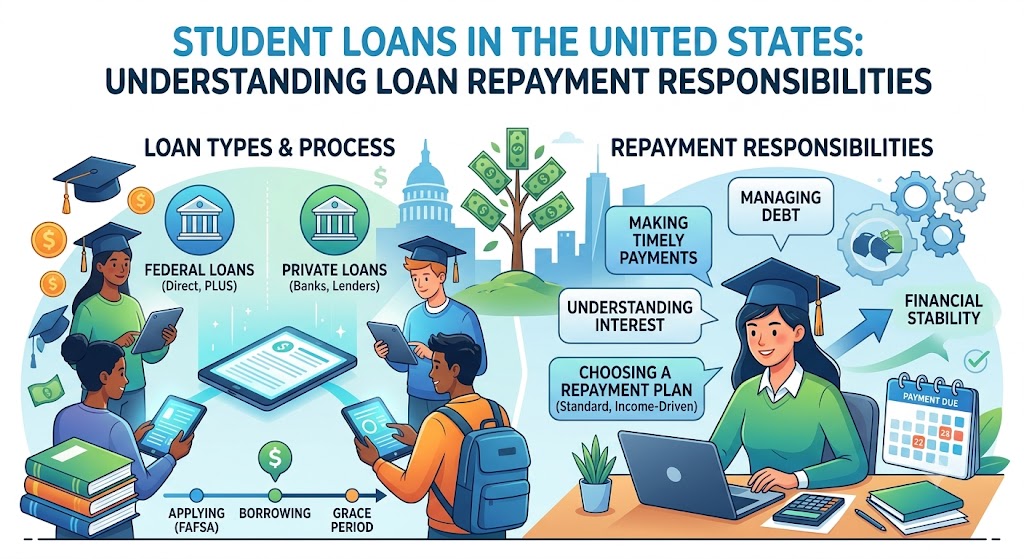
Making Sense of Loans and Repayment Responsibilities
Borrowing money can help people pay for education, purchase a home, replace a vehicle, manage a major expense, or finance a business. Understanding the type of loan, total cost, repayment schedule, and responsibilities involved is an important part of borrowing responsibly.
Loan terms vary between lenders, borrowers, products, and locations. Interest rates, fees, eligibility rules, repayment options, and consumer protections can change. Always review the actual loan agreement and current information from the lender before borrowing.
What a Loan Really Means
A loan is money provided by a lender with an agreement that the borrower will repay the amount according to specific terms. The borrower may also have to pay interest and other applicable charges.
The original amount borrowed is commonly called the principal. Interest is the cost of borrowing the money. Depending on the loan, there may also be application fees, origination charges, late fees, servicing fees, or other costs.
Because the total amount repaid can be considerably higher than the amount originally borrowed, looking only at the monthly payment can create an incomplete picture.
Common Loan Categories
Different loans are designed for different purposes. The appropriate product depends on what the money is being used for and the terms offered by the lender.
| Loan Type | Typical Purpose | Important Features to Review |
|---|---|---|
| Personal Loan | May be used for certain personal expenses | Interest rate, fees, term, monthly payment |
| Mortgage | Used to finance a home purchase | Interest rate, down payment, term, closing costs |
| Auto Loan | Used to finance a vehicle | Vehicle price, loan term, interest, down payment |
| Student Loan | Used for eligible education expenses | Interest, repayment options, deferment rules, loan type |
| Business Loan | May finance business-related expenses | Interest, collateral, fees, repayment structure |
| Credit Line | Provides access to borrowing up to an approved limit | Interest rate, fees, credit limit, repayment requirements |
The name of a loan does not tell the entire story. Two products in the same category can have very different costs and conditions.
Secured and Unsecured Borrowing
Secured Loans
A secured loan is backed by an asset that serves as collateral. Mortgages and many vehicle loans are examples of borrowing that can involve collateral.
If the borrower fails to meet the agreement, the lender may have rights related to the collateral under applicable law and the loan contract.
Unsecured Loans
An unsecured loan does not normally require a specific asset as collateral. Personal loans and certain other forms of credit may fall into this category.
Because the lender does not have the same type of collateral protection, pricing and approval requirements can differ from secured borrowing.
Before borrowing, understand whether the loan is secured and what could happen if payments are missed. This is particularly important when the collateral is a home, vehicle, or another valuable asset.
Fixed and Variable Interest Rates
The interest rate can have a major effect on the total cost of borrowing.
| Rate Structure | How It Works | What to Understand |
|---|---|---|
| Fixed Rate | The stated interest rate generally remains unchanged according to the loan agreement. | Payments may be easier to plan because the rate is more predictable. |
| Variable Rate | The interest rate can change according to the terms of the agreement and relevant market conditions. | Payments or borrowing costs may increase or decrease over time. |
A lower starting rate does not necessarily mean a lower total cost. Borrowers should examine how the rate works throughout the entire repayment period.
Understanding the Monthly Payment
A monthly payment can contain several components. For an amortising loan, part of the payment may go toward interest while another part reduces the principal balance.
At the beginning of some loans, a larger portion of the scheduled payment may go toward interest. As the principal balance decreases, the amount of interest charged can also change according to the loan structure.
Think Beyond the Monthly Number
A payment that appears affordable each month can still result in a substantial total cost if the repayment period is very long. When comparing loans, consider the amount borrowed, interest rate, fees, monthly payment, repayment period, and total amount expected to be paid.
Repayment Plans Explained
Repayment plans determine how a borrower pays back the debt. The available options depend on the type of loan and the lender.
The borrower makes regular payments according to the agreed schedule until the balance is repaid.
A longer repayment period can reduce the required monthly payment in some situations, but extending the loan can increase the total interest paid.
Certain eligible education loans may offer repayment structures connected to income and other factors. Availability depends on the specific program and current rules.
Some borrowers choose to pay more than the required amount when permitted. This can potentially reduce the outstanding principal and future interest, depending on the loan terms.
What Happens When a Payment Is Missed?
Missing a loan payment can have financial consequences. Depending on the agreement and applicable rules, a late payment may result in fees, additional interest, negative credit reporting, or other collection activity.
The consequences can vary based on the type of loan, how late the payment is, the lender’s policies, and applicable consumer protection laws.
If you expect difficulty making a payment, contacting the lender or loan servicer early may provide more options than waiting until the account becomes seriously delinquent. Ask what assistance, payment arrangements, or hardship options may be available under the specific loan agreement.
Credit Scores and Borrowing
Credit history can influence whether a person qualifies for certain forms of credit and the terms offered by a lender. Lenders may review credit information along with income, debt obligations, employment information, assets, and other factors.
Credit scores are calculated using information in credit reports. Different scoring models can produce different scores, and lenders may use different criteria when evaluating applications.
Responsible repayment can help maintain a healthy credit history, while missed or late payments can have negative effects depending on the circumstances and reporting practices.
Good record keeping matters
Keep copies of loan agreements, payment confirmations, statements, and communications with lenders. Reviewing statements regularly can also help identify errors or unexpected charges.
Compare Loans Before Signing
Comparing borrowing options can help reveal differences that are not obvious from the advertised monthly payment.
| Question | Why It Matters |
|---|---|
| How much am I borrowing? | Determines the principal balance that must be repaid. |
| What is the interest rate? | Affects the cost of borrowing. |
| What fees apply? | Additional charges can increase the overall cost. |
| How long is the repayment term? | A longer term can change both monthly payments and total interest. |
| Can the rate change? | Variable rates can create uncertainty about future borrowing costs. |
| Can I make extra payments? | Some borrowers may want flexibility to reduce the balance faster. |
| What happens if I miss a payment? | Understanding consequences helps borrowers prepare for financial difficulties. |
Financial Responsibilities of a Borrower
Taking out a loan creates an ongoing financial obligation. Before signing an agreement, borrowers should make sure the expected payment fits realistically within their budget.
Income can change because of job loss, reduced working hours, business conditions, family circumstances, or unexpected expenses. A responsible borrowing decision should therefore consider not only today’s budget but also the possibility of future financial changes.
It can also be useful to maintain an emergency fund where possible so that an unexpected expense does not immediately make a loan payment unaffordable.
Debt Consolidation and Refinancing
Debt consolidation generally involves combining multiple debts into another borrowing arrangement. Refinancing involves replacing an existing loan with a new loan, often with different terms.
These strategies can sometimes simplify payments or change the interest rate or repayment period. However, a lower monthly payment does not automatically mean a lower total cost.
When evaluating consolidation or refinancing, compare the new interest rate, fees, repayment period, monthly payment, and total amount expected to be paid. Also consider whether extending the repayment period increases the overall cost.
How to Build a Loan Repayment Budget
A repayment budget begins with a realistic view of monthly income and essential expenses.
Use realistic income figures rather than assuming unusually high overtime, bonuses, or irregular earnings will always continue.
Include housing, food, utilities, transportation, insurance, healthcare, and other necessary household expenses.
Write down current loan payments, credit card obligations, and other recurring debt commitments.
Determine what remains after essential expenses and existing obligations before taking on additional borrowing.
Leave room for emergencies and irregular expenses instead of assigning every remaining dollar to debt payments.
Questions to Ask Before Taking a Loan
About the Cost
What is the interest rate?
What fees are charged?
What is the total amount expected to be repaid?
Does the interest rate remain fixed?
About Repayment
What is the monthly payment?
When does repayment begin?
What happens after a missed payment?
Can additional payments be made?
Frequently Asked Questions
No. A lower payment may result from a longer repayment period, which can increase the total amount of interest paid over time.
Principal is the amount borrowed, while interest is the cost charged for borrowing that money.
Yes. Different lenders can offer different interest rates, fees, repayment periods, eligibility requirements, and other terms.
Contact the lender or loan servicer as soon as possible. Ask what options may be available and review the consequences described in the loan agreement.
Depending on the loan terms, additional payments may reduce the principal faster and potentially reduce future interest. Borrowers should check how extra payments are applied and whether any restrictions or fees exist.
The agreement contains important details about interest, fees, repayment schedules, late payments, default provisions, and other responsibilities that may not appear in a short advertisement.
Make Borrowing Part of a Clear Financial Plan
A loan can provide access to money when a major purchase, education expense, home purchase, vehicle, or other financial need requires funding. At the same time, borrowing creates a responsibility that can continue for months or years.
Understanding the principal, interest rate, fees, repayment period, payment schedule, and consequences of missed payments can help borrowers evaluate the full commitment before signing an agreement.
The most useful comparison is rarely just the monthly payment. Looking at the complete cost and how the debt fits into a realistic household budget provides a clearer picture of what borrowing will mean over time.
Before accepting a loan, review the lender’s current terms carefully, ask questions about anything that is unclear, and keep records of the agreement and future payments. Good financial planning starts with knowing exactly what you are agreeing to repay.