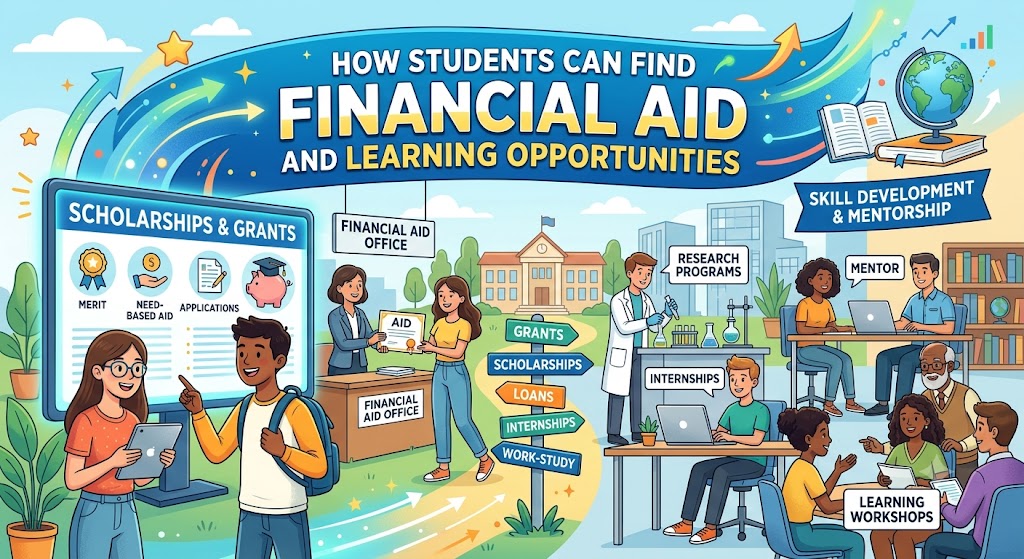
Finding Education and Scholarship Opportunities in the United States
Understanding financial aid, scholarships, grants, work opportunities, and other resources can help students plan for education while managing the cost of college and career training.
Why Education Planning Matters
Higher education and career training can open doors to professional opportunities, but the cost of education can vary significantly depending on the institution, program, location, housing arrangements, and other expenses.
Students and families can make the process easier by researching educational options and financial assistance at the same time. Waiting until after enrollment to think about funding may leave fewer opportunities to explore.
A good education plan considers more than tuition. Books, transportation, housing, food, technology, fees, and other living expenses can also affect the overall cost of attending school.
Different Education Options in the United States
Students do not have to follow a single path after high school. The United States has several types of educational institutions, and each can serve different academic and career goals.
Community colleges often provide associate degree programs, career training, certificates, and pathways that can lead to further education.
Colleges and universities can offer bachelor’s degree programs across areas such as business, science, technology, arts, education, and many other fields.
Some institutions offer online degree programs, courses, and professional training that can provide additional flexibility for students.
Career and technical education can prepare students for occupations requiring practical or specialised skills.
Understanding Scholarships
A scholarship is financial assistance awarded to a student according to criteria established by the organisation providing the funding. Scholarships can come from colleges, universities, nonprofit organisations, foundations, businesses, professional associations, community organisations, and other sources.
Some scholarships consider academic achievement, while others may focus on community involvement, leadership, artistic ability, athletics, a particular field of study, geographic background, or other criteria.
Not every scholarship requires exceptional grades. Some opportunities are designed around specific interests, career plans, communities, experiences, or educational goals.
Always read the official scholarship requirements carefully. Eligibility rules, application deadlines, required documents, and award conditions can vary substantially between scholarships.
Grants and Other Forms of Financial Aid
Scholarships are only one part of the financial aid system. Students may also encounter grants, work-study opportunities, student loans, institutional aid, and other forms of assistance.
| Financial Aid Type | General Description | Important Consideration |
|---|---|---|
| Scholarships | Funding awarded according to specific eligibility criteria | Requirements and renewal conditions vary |
| Grants | Financial assistance that may be available through federal, state, institutional, or other programs | Eligibility depends on the specific program |
| Work-Study | Programs that can provide eligible students with opportunities to earn money through approved employment | Availability depends on the institution and program |
| Student Loans | Borrowed funds used toward eligible education expenses | Loans generally must be repaid according to their terms |
| Institutional Aid | Financial assistance provided directly by a college or university | Policies differ between institutions |
Understanding FAFSA
The Free Application for Federal Student Aid, commonly known as FAFSA, is an important part of the U.S. financial aid process for eligible students seeking federal student aid.
Information submitted through the FAFSA can be used by schools and relevant agencies when determining eligibility for certain types of financial aid. Depending on the student’s circumstances and the applicable rules, financial aid may include grants, work-study opportunities, and federal student loans.
Students should use official government resources to learn about the current FAFSA process, required information, deadlines, and eligibility requirements because the application process and rules can change.
Do not wait until the last moment to research financial aid. Some forms of assistance have specific deadlines, and colleges may have their own financial aid timelines.
How Students Can Search for Scholarships
Scholarship research works best when students use several sources instead of relying on a single search.
Check whether the institution offers merit scholarships, need-based assistance, departmental awards, or other forms of institutional funding.
Community groups, foundations, professional organisations, and local businesses may offer scholarships for students who meet specific criteria.
Industry and professional organisations sometimes provide educational awards connected to specific fields of study.
Students can research scholarship databases and educational resources while verifying every opportunity through the organisation responsible for the award.
Create a simple calendar containing scholarship names, eligibility requirements, application deadlines, documents, and submission status.
Build a Scholarship Application Strategy
Applying for scholarships can become time-consuming when students approach every application differently. A better system is to create a reusable collection of basic information and documents.
Keep commonly requested educational and contact information organised so it can be entered accurately when required.
Prepare thoughtful writing about educational goals, experiences, interests, and future plans while adapting each response to the specific scholarship.
Maintain a record of academic achievements, projects, activities, volunteering, leadership experiences, and relevant awards.
Record every application deadline and leave enough time to review documents before submission.
Community Colleges Can Be Part of the Plan
For some students, starting at a community college can be an alternative pathway into higher education or career training.
Community colleges may offer associate degrees, certificates, workforce programs, and transfer pathways. Some students use these programs to complete initial coursework before transferring to another institution, while others enter the workforce after completing career-focused training.
Students considering this route should investigate transfer agreements, program requirements, total costs, financial aid options, and the specific qualifications needed for their intended career.
Consider the Total Cost of Education
Comparing colleges only by tuition can provide an incomplete picture of educational costs.
| Expense Area | What Students Should Consider |
|---|---|
| Tuition | The amount charged for enrollment and coursework |
| Fees | Institutional or course-related charges that may be separate from tuition |
| Housing | On-campus housing or rent and related living costs |
| Food | Meal plans or everyday grocery and dining expenses |
| Books and Supplies | Textbooks, equipment, software, and other academic materials |
| Transportation | Travel between home, campus, work, and other locations |
| Technology | Computer, internet, software, or other technology requirements |
A school with a higher advertised tuition cost may have substantial financial aid available, while a lower-cost institution may have different living expenses. Looking at the complete financial picture can therefore provide a more useful comparison.
Look Beyond Grades
Academic performance can be important for some scholarships, but education and career opportunities are not always determined by grades alone.
Students can also develop valuable experiences through projects, internships, volunteering, student organisations, community activities, employment, research, creative work, and practical training.
These experiences can help students discover interests and develop communication, teamwork, leadership, problem-solving, and technical skills.
Be Careful With Scholarship Scams
Students searching for financial aid should be careful with organisations or websites that make unrealistic promises.
Be cautious when a service claims that a scholarship is guaranteed, demands unusual upfront payments, requests sensitive information without a clear reason, or pressures applicants to act immediately.
A legitimate scholarship should have clear information about the organisation providing the award, eligibility requirements, application process, deadline, and contact information.
Before submitting sensitive personal or financial information, verify that you are dealing with the genuine organisation and that the application is being submitted through an appropriate official channel.
Build a Learning Plan Beyond College
Education does not have to end when a student receives a degree. Professional development can continue through certifications, short courses, workshops, industry training, continuing education, employer programs, and independent learning.
The most useful learning opportunity depends on the career. Some professions require formal licensing or recognised credentials, while other industries may place greater emphasis on practical experience and demonstrated skills.
Before paying for a course or certification, research whether employers in the intended field actually value it and whether the qualification is recognised for the type of work being pursued.
A Practical Education Planning Roadmap
Decide whether you are looking for a degree, certificate, career training, professional development, or another type of learning opportunity.
Compare programs, admission requirements, location, delivery format, costs, and available student services.
Look into federal aid, state programs, institutional assistance, scholarships, grants, and other legitimate funding sources.
Prepare academic records, financial information, identification, essays, recommendation materials, and other documents that may be requested.
Use a calendar or spreadsheet to avoid missing admission, financial aid, scholarship, and enrollment deadlines.
Consider tuition, housing, food, transportation, books, fees, and other expenses before making an enrollment decision.
Frequently Asked Questions
In some circumstances, yes. Students may receive multiple forms of financial assistance, but each program and institution can have rules governing how different types of aid interact.
No. Scholarship criteria vary. Some focus on academic achievement, while others may consider community involvement, career interests, activities, leadership, location, field of study, or other factors.
Starting early is generally useful because scholarship deadlines can occur at different times. Early research also gives students more time to prepare essays, documents, and recommendations.
No. Some scholarships may require FAFSA information while others are independent of federal financial aid applications. Students should check the requirements for each specific opportunity.
Yes. Many educational institutions offer programs for adult learners, career changers, part-time students, and people returning to education after an employment break. Available programs and funding options depend on the institution and the student’s circumstances.
Understand exactly what the funding is, how much it covers, whether it needs to be repaid, what conditions apply, and whether there are renewal or eligibility requirements.
🎓 Build an Education Plan That Fits Your Goals
Finding the right education opportunity is about more than choosing a school. Students can benefit from looking at their career interests, comparing different education pathways, researching financial aid, and understanding the total cost of attendance.
Scholarships and other financial aid can make education more accessible, but students should always verify eligibility requirements and deadlines through reliable sources. Starting early, keeping documents organised, and researching several funding options can make the process easier to manage.
Whether the goal is a traditional university degree, community college education, professional certification, technical training, or continuing education, a clear plan can help turn an educational goal into practical next steps.