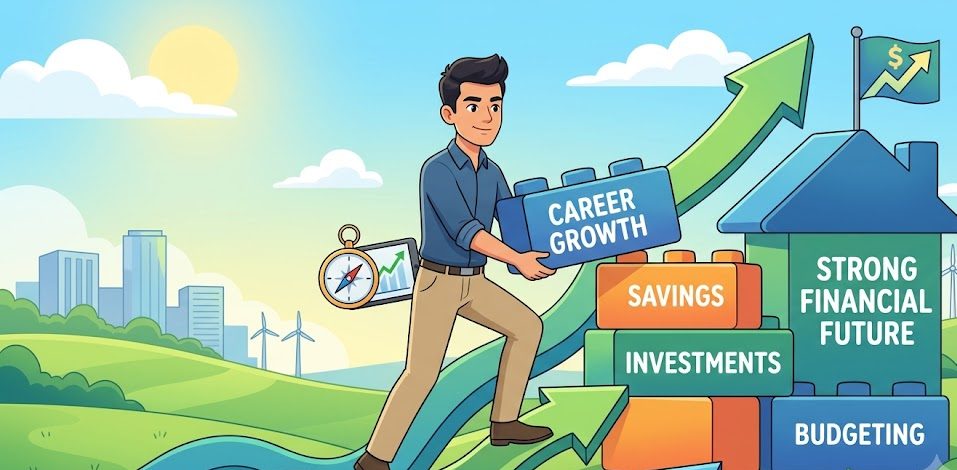
Building a stronger financial future rarely happens through one major decision. It usually develops through a combination of career planning, consistent income, responsible spending, skill development, and long-term financial habits. Whether someone is beginning their first job, changing careers, working independently, or trying to improve their personal finances, small improvements can gradually create meaningful results.
The modern job market can change quickly. New technologies create different types of work, industries evolve, and employers increasingly value practical skills alongside formal qualifications. At the same time, rising everyday expenses make it important for workers to understand how their income is being used.
A practical financial strategy therefore needs to connect career decisions with money management. Earning more can help, but keeping a reasonable portion of that income, preparing for unexpected expenses, and investing in useful skills are equally important.
Career
Build valuable skills and improve earning potential.
Income
Create reliable sources of income and manage them carefully.
Budget
Understand where your money goes each month.
Goals
Turn financial priorities into practical actions.
Start With a Clear Career Direction
Career planning becomes easier when you understand what you want your work life to provide. Some people prioritize income, while others may value flexibility, stability, professional growth, location, or opportunities to learn.
Instead of choosing a career solely because it appears popular, examine your existing strengths and the skills that employers actually need. Research job descriptions in your preferred field and identify the qualifications that repeatedly appear.
Write down three skills you already have, three skills employers in your target field request, and three skills you could realistically develop during the next year.
Treat Skills as Long-Term Financial Assets
A person’s ability to earn is influenced by the value they can provide through their knowledge and skills. This makes skill development an important part of personal financial planning.
Technical abilities, communication, project management, data analysis, digital tools, sales, design, writing, and industry-specific knowledge can all be valuable depending on the profession.
Learning does not necessarily require expensive courses. Books, reputable educational resources, practical projects, professional communities, internships, and workplace experience can all contribute to skill development.
Focus on Demonstrable Skills
A certificate can show that you completed a course, but a portfolio, project, work sample, or measurable achievement can often demonstrate what you are actually capable of doing.
Make Your Income More Predictable
A stronger financial position begins with understanding your income. Employees should know their regular take-home pay, while freelancers and self-employed workers may need to account for irregular payments, taxes, business expenses, and periods with lower revenue.
If income changes from month to month, creating a budget around a conservative estimate can be more practical than assuming every month will be equally strong.
For variable income
- Track income over several months.
- Separate essential expenses from optional spending.
- Build a reserve during stronger months.
- Keep business and personal expenses organized where applicable.
- Plan ahead for irregular bills.
Build a Budget That You Can Actually Follow
A budget should be practical rather than complicated. Its purpose is to help you understand your financial position and make deliberate decisions.
Start by listing essential expenses such as housing, food, transportation, utilities, education, insurance, and debt payments. Then identify flexible expenses such as entertainment, shopping, subscriptions, and dining out.
| Category | Examples | Review |
|---|---|---|
| Essentials | Housing, food, utilities | Monthly |
| Financial Goals | Savings, investing, debt reduction | Monthly |
| Flexible | Entertainment, shopping | Weekly or monthly |
Create an Emergency Reserve
Unexpected expenses can interrupt even a carefully planned budget. A vehicle repair, temporary loss of income, urgent household expense, or other surprise bill can become stressful when there is no accessible reserve.
An emergency fund is designed for unexpected and necessary expenses rather than everyday shopping. The appropriate amount depends on income stability, household responsibilities, regular expenses, and other circumstances.
Make saving automatic
If possible, schedule a transfer to a suitable savings account soon after receiving income. Automation can make saving more consistent because the money is set aside before it is easily spent.
Be Careful With High-Cost Debt
Debt can be useful when it helps finance an important goal, but expensive debt can make financial progress considerably harder. High-interest balances can grow when payments are delayed or only minimum amounts are paid.
Review the interest rate, fees, repayment period, and total cost before taking on new debt. When multiple balances exist, creating a repayment plan can help maintain control.
Avoid borrowing simply to maintain a lifestyle that is difficult to support with current income. A temporary purchase can create a long-term financial obligation.
Increase Earning Potential Without Ignoring Your Current Job
Increasing income does not always require immediately changing employers. Sometimes the first step is becoming more valuable in the role you already have.
Take responsibility for meaningful projects, improve professional communication, learn relevant tools, and keep evidence of measurable contributions. These improvements can support future conversations about promotions, expanded responsibilities, or career transitions.
Strengthen existing professional skills.
Record useful results and achievements.
Explain your contribution clearly.
Look for roles that match your growing abilities.
Develop a Professional Network
Career opportunities are not always discovered through job advertisements. Professional relationships can help people learn about industries, understand employer expectations, discover opportunities, and receive useful feedback.
Networking does not have to mean asking strangers for jobs. It can begin with genuine conversations, professional communities, alumni groups, industry events, online discussions, and collaborative projects.
The goal is to build relationships based on mutual value rather than treating every interaction as a transaction.
Keep Your Resume and Online Profile Updated
Career preparation is easier when professional materials are ready before an opportunity appears. Keep your resume current and adjust it for relevant positions rather than sending exactly the same version everywhere.
Highlight achievements, responsibilities, technical skills, projects, and results that are relevant to the position. Avoid filling the document with unnecessary information that does not demonstrate your suitability.
Your resume should make it easy for a recruiter to understand what you can do, what experience you have, and how your background relates to the position.
Create More Than One Path to Income
Depending on personal circumstances and available time, some people may benefit from developing an additional income source. Freelance services, tutoring, consulting, digital work, part-time employment, or small business activities are examples of possibilities.
Additional income should be approached realistically. Building a side income can require time, marketing, customer service, equipment, and learning. Not every online opportunity is legitimate, and claims of guaranteed earnings should be treated carefully.
Before starting a side activity, understand the costs involved and check applicable tax, licensing, employment, and regulatory requirements.
Separate Wants From Financial Priorities
Enjoying your income is not necessarily a financial mistake. The problem arises when discretionary spending consistently prevents important financial goals from being funded.
Instead of eliminating every enjoyable expense, identify which purchases provide genuine value and which are mainly driven by impulse or social pressure.
Before a large purchase, ask:
- Do I actually need this?
- Can I comfortably afford it?
- Will buying it delay an important goal?
- Am I purchasing it because of genuine need or temporary excitement?
- Are there lower-cost alternatives?
Protect Yourself From Financial Scams
Career and finance topics attract scammers because people are actively searching for jobs, investments, loans, and ways to earn additional money.
Be cautious with opportunities that promise guaranteed income, unusually high returns, instant employment, or large rewards for very little work. Never provide sensitive financial information simply because an unfamiliar person claims to represent a company.
Verify organizations independently and use official websites or trusted communication channels when dealing with employment, banking, government benefits, or financial services.
Think About Long-Term Investing Carefully
Once basic financial needs are under control, some people may consider investing for longer-term goals. Investment decisions should be based on personal circumstances, risk tolerance, time horizon, and an understanding of the product involved.
There is no investment that can guarantee high returns without risk. Before investing, learn how the product works, what fees apply, how easily money can be accessed, and what risks could result in losses.
Diversification can reduce dependence on one investment, although it cannot eliminate market risk.
Set Financial Goals With Specific Numbers
“I want to save more money” is a useful intention but not a complete financial plan. A clearer goal identifies what you are saving for, how much you need, and approximately when you want to reach it.
Short Term
Emergency reserve, upcoming education expenses, equipment, or planned purchases.
Long Term
Retirement, major life goals, business plans, or long-term wealth building.
Review Your Financial Progress Regularly
A financial plan should not remain unchanged for years. Income, expenses, career circumstances, family responsibilities, and economic conditions can change.
Set aside time every few months to review your budget, savings progress, debt, career development, and financial goals. If something is not working, adjust the plan instead of abandoning it completely.
A practical monthly review
- Check total income received.
- Compare actual spending with your budget.
- Review savings contributions.
- Check debt balances and payments.
- Identify unnecessary recurring expenses.
- Review progress toward career goals.
- Choose one financial improvement for the next month.
Think in Terms of Financial Resilience
Financial strength is not simply about having a high salary. A person with a large income but uncontrolled spending and significant expensive debt may remain financially vulnerable.
Resilience comes from having multiple layers of protection: useful skills, reliable income, manageable expenses, emergency savings, appropriate insurance where relevant, and a clear understanding of financial commitments.
These layers do not need to be created simultaneously. They can be developed gradually as circumstances allow.
The Stronger-Future Framework
“`Develop valuable skills and pursue suitable career opportunities.
Track income and control unnecessary spending.
Prepare for unexpected expenses and financial risks.
Continue learning and consider suitable long-term financial strategies.
Final Thoughts
“`A stronger financial future is usually built through consistent decisions rather than quick financial shortcuts. Career development can increase earning potential, while budgeting and responsible spending can help ensure that more of that income remains available for meaningful goals.
Students, employees, freelancers, and business owners can all benefit from the same basic principles: continue developing useful skills, understand your income, manage expenses, prepare for emergencies, be cautious with debt, and set realistic financial goals.
There is no single strategy that works perfectly for everyone. Personal circumstances, location, career stage, family responsibilities, and financial priorities all influence the right approach.
The most useful strategy is one that can actually be maintained. Small improvements repeated over months and years can create a much stronger foundation than dramatic financial decisions that are difficult to sustain.
“`