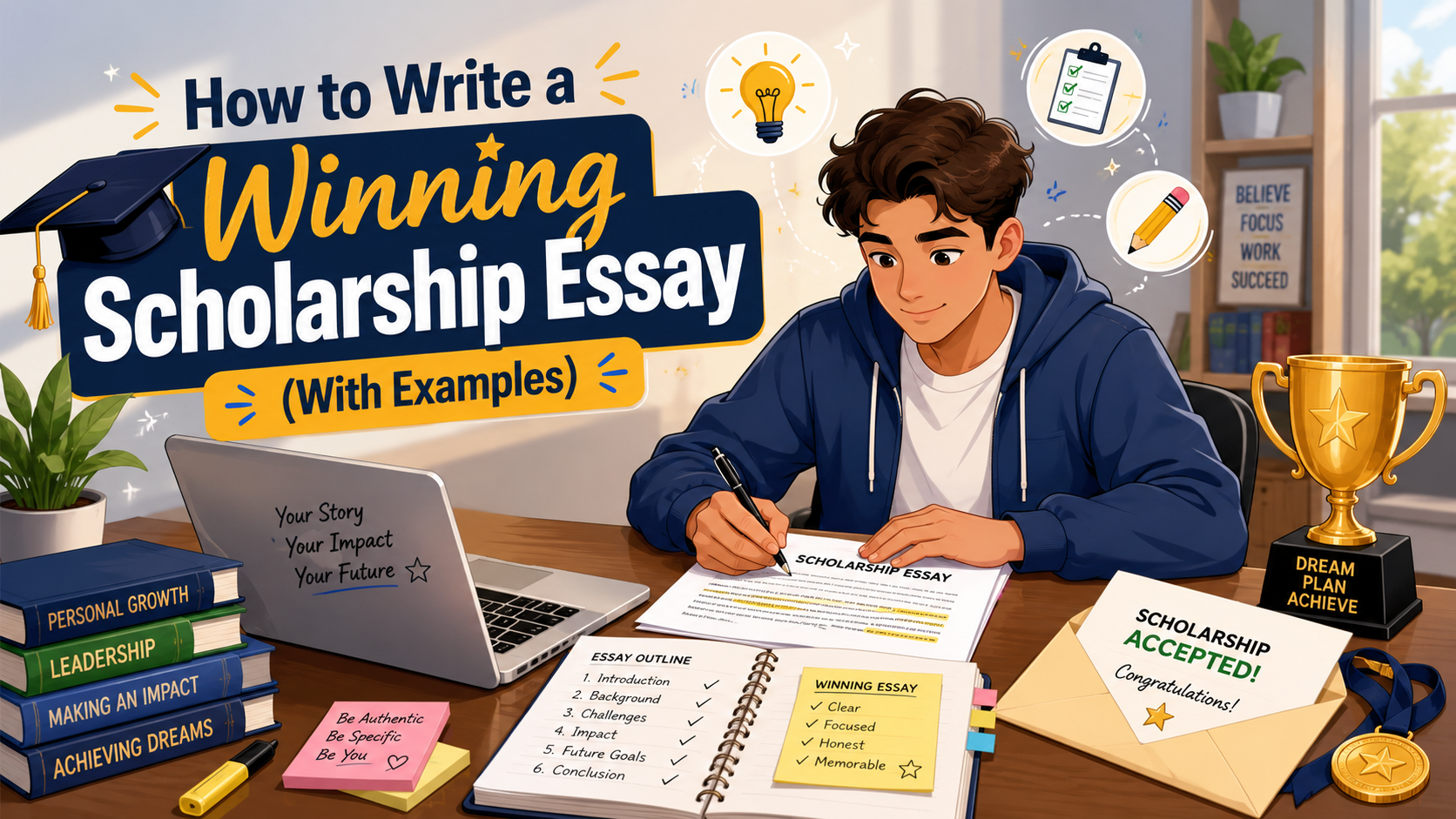
A scholarship essay is more than a school assignment. It is your chance to show the selection committee who you are, what shaped you, what you hope to achieve, and why their support would matter. Strong grades may place you on the shortlist, but a memorable essay can separate you from similar applicants.
The best essays are clear, personal, and honest. A winning essay shows growth, connects experience with future goals, and gives the reader a reason to believe in your potential.
The best essays are clear, personal, and honest. A winning essay shows growth, connects experience with future goals, and gives the reader a reason to believe in your potential.
Understand the Prompt Before Writing
Many applicants begin too quickly and later discover that their story does not answer the question. Read the prompt carefully and identify exactly what the committee wants to learn.
A leadership prompt is not asking for a list of positions. It wants to know how you influenced others, solved a problem, or accepted responsibility. A financial-need prompt should explain the situation respectfully while showing determination. A career-goals prompt should connect your chosen field with a clear purpose.
Underline the key words and turn the prompt into one simple question. Every major paragraph should help answer it.
A leadership prompt is not asking for a list of positions. It wants to know how you influenced others, solved a problem, or accepted responsibility. A financial-need prompt should explain the situation respectfully while showing determination. A career-goals prompt should connect your chosen field with a clear purpose.
Underline the key words and turn the prompt into one simple question. Every major paragraph should help answer it.
Choose One Strong Story
Trying to include your entire life usually creates a weak essay. Instead, choose one central experience that reveals something important about your character.
The experience can be ordinary: helping in a family business, caring for a sibling, rebuilding your grades, leading a project, or balancing school with work.
What matters is the meaning behind the event. Explain what happened, how you responded, what you learned, and how the experience still influences your goals.
The experience can be ordinary: helping in a family business, caring for a sibling, rebuilding your grades, leading a project, or balancing school with work.
What matters is the meaning behind the event. Explain what happened, how you responded, what you learned, and how the experience still influences your goals.
Use a Clear Essay Structure
| Section | Purpose | What to Include |
|---|---|---|
| Opening | Capture attention | A moment, decision, or surprising detail |
| Body | Develop the story | Actions, challenges, lessons, and growth |
| Connection | Link experience to goals | Education plans and future impact |
| Conclusion | Leave a final impression | Confidence and forward momentum |
Write an Opening That Feels Real
Avoid beginning with a dictionary definition, famous quotation, or “Ever since I was young.” These openings are common and reveal little about you. Start inside a specific moment. Let the reader see what you saw or understand the decision you faced.
Weak opening:
“Leadership is an important quality that helps people succeed.”
Stronger opening:
“When our food-drive coordinator became ill two days before collection day, forty volunteers were waiting for direction. I had never led a project that large, but I opened the planning sheet and began assigning routes.”
“Leadership is an important quality that helps people succeed.”
Stronger opening:
“When our food-drive coordinator became ill two days before collection day, forty volunteers were waiting for direction. I had never led a project that large, but I opened the planning sheet and began assigning routes.”
The stronger version creates interest and gives the writer room to explain the result and lesson.
Show Your Qualities Through Action
Telling the committee that you are hardworking, compassionate, or determined is not enough. Show those qualities through decisions and behavior.
Instead of writing, “I am dedicated to education,” explain how you studied before dawn while working evening shifts. Instead of saying, “I care about my community,” describe the tutoring program you organized and the students it helped.
Specific details make your essay believable. Numbers can support the story, but the reader still needs to see the person behind the achievement.
Instead of writing, “I am dedicated to education,” explain how you studied before dawn while working evening shifts. Instead of saying, “I care about my community,” describe the tutoring program you organized and the students it helped.
Specific details make your essay believable. Numbers can support the story, but the reader still needs to see the person behind the achievement.
Connect the Story to Your Future
A scholarship committee is investing in what you may accomplish next. Connect your experience to your education and long-term goals. Explain what you want to study and how you hope to use it.
Example:
“Helping my grandfather manage his diabetes showed me how confusing medical instructions can feel outside a clinic. I plan to study nursing and develop the communication skills needed to help patients understand their treatment.”
“Helping my grandfather manage his diabetes showed me how confusing medical instructions can feel outside a clinic. I plan to study nursing and develop the communication skills needed to help patients understand their treatment.”
This example connects a personal experience to an academic direction and clear future service.
Explain Financial Need With Confidence
When financial need is part of the prompt, explain why the scholarship matters without making the essay sound hopeless.
Mention relevant circumstances such as limited household income, caregiving duties, medical costs, employment, or limited college savings. Then explain what you have done despite those limitations.
The message should not be “I cannot succeed without help.” It should be “I am already working toward this goal, and this scholarship would remove a barrier that limits my progress.”
Mention relevant circumstances such as limited household income, caregiving duties, medical costs, employment, or limited college savings. Then explain what you have done despite those limitations.
The message should not be “I cannot succeed without help.” It should be “I am already working toward this goal, and this scholarship would remove a barrier that limits my progress.”
Match the Scholarship Organization
Research the organization’s mission and values. Identify a genuine connection instead of copying its language.
A scholarship supporting future teachers should receive an essay that clearly explains your interest in education. An award focused on service should show consistent involvement rather than one activity completed only for an application.
A scholarship supporting future teachers should receive an essay that clearly explains your interest in education. An award focused on service should show consistent involvement rather than one activity completed only for an application.
Edit for Clarity and Originality
Your first draft is only the beginning. Remove repeated ideas, vague sentences, unnecessary background, and words you would not normally use.
Read the essay aloud to notice awkward phrases. Make sure every paragraph answers the prompt. Ask a trusted teacher or mentor to review it, but do not let another person replace your voice.
Finally, verify the word limit, file format, deadline, scholarship name, and submission instructions.
Read the essay aloud to notice awkward phrases. Make sure every paragraph answers the prompt. Ask a trusted teacher or mentor to review it, but do not let another person replace your voice.
Finally, verify the word limit, file format, deadline, scholarship name, and submission instructions.
Common Mistakes to Avoid
- Using one generic essay for every scholarship.
- Repeating information already shown in the application.
- Listing achievements without explaining their meaning.
- Exaggerating hardship or inventing experiences.
- Ignoring the word limit or submission deadline.
- Using language that does not sound natural.
Frequently Asked Questions
Should I include personal struggles?
Yes, when they support the prompt and demonstrate growth. Focus more on your response than the hardship itself.
Can I reuse a scholarship essay?
You can reuse a central story, but adjust each essay to answer the specific prompt and reflect the organization’s purpose.
What if I have no major achievements?
Write about responsibility, improvement, persistence, family contribution, or a small experience that changed your thinking. Insight often matters more than scale.
Should I use AI to write the essay?
Use tools only for brainstorming or proofreading when allowed. The final essay should reflect your real experience, natural voice, and honest ideas.
Final Thoughts
A winning scholarship essay does not depend on perfect language. It helps the reader remember a real person with a clear goal, meaningful experience, and determination to move forward.
Answer the prompt directly, build the essay around one focused story, show your qualities through action, and connect your experience to the future. Careful editing can turn a sincere draft into an application that feels confident, polished, and genuinely yours.
Answer the prompt directly, build the essay around one focused story, show your qualities through action, and connect your experience to the future. Careful editing can turn a sincere draft into an application that feels confident, polished, and genuinely yours.