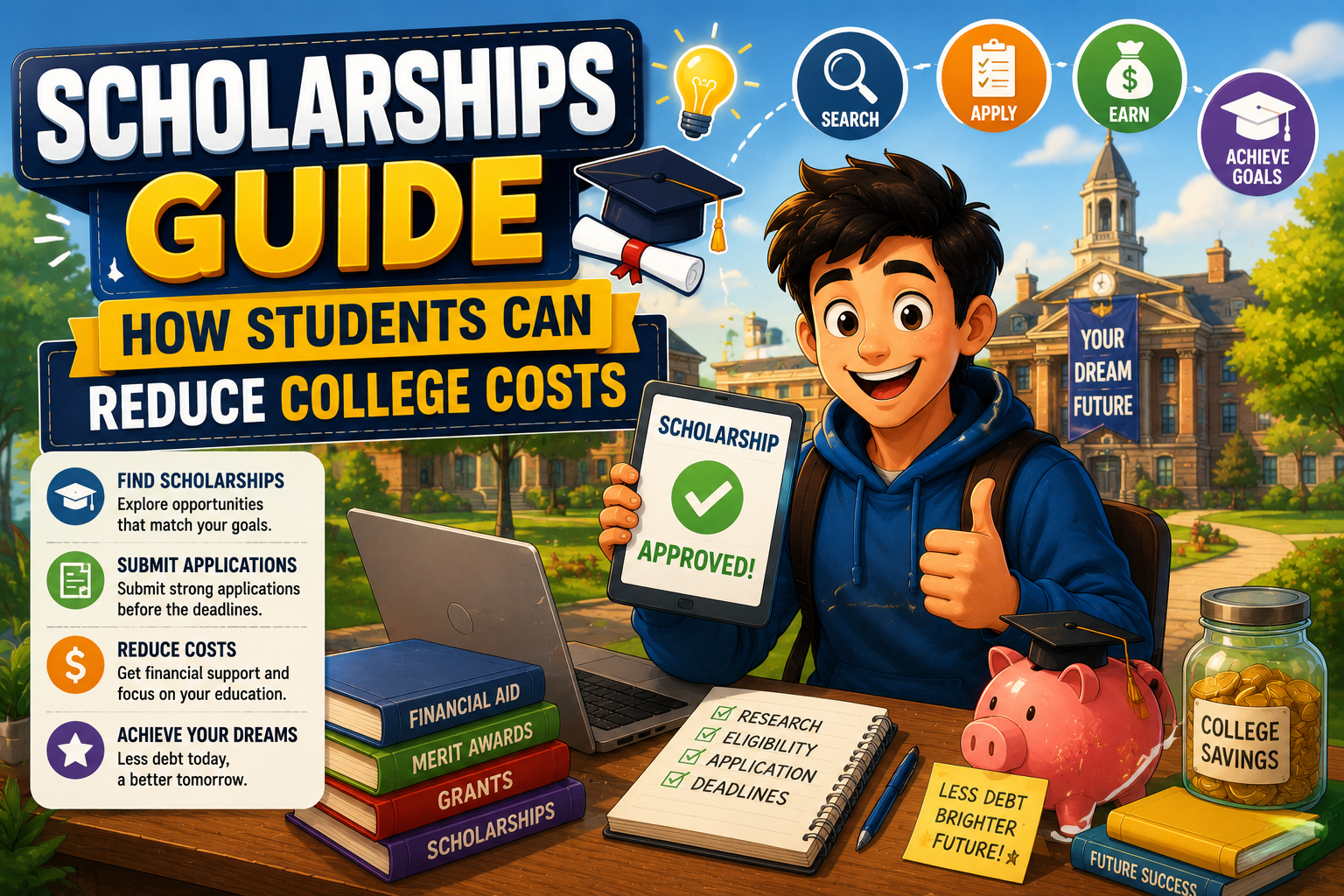
Practical ways to lower tuition, reduce borrowing, find financial support, and make smarter decisions before and during college.
College can provide valuable knowledge, career opportunities, and personal growth, but it can also create significant financial pressure. Tuition, accommodation, textbooks, transport, food, technology, and daily living expenses can quickly add up.
“`Students do not always have to accept the full advertised cost of education. Scholarships, grants, work opportunities, careful course selection, and better budgeting can reduce the amount that families need to pay or borrow.
The most effective strategy is to begin planning early. Students who compare institutions, understand financial aid, apply for several scholarships, and control living expenses often have more options than those who wait until the final admission stage.
“`Compare Colleges
Look beyond tuition and compare the full cost of attendance.
Apply for Aid
Use scholarships, grants, bursaries, and employer support.
Reduce Expenses
Save on books, housing, meals, transport, and subscriptions.
Borrow Carefully
Understand repayment terms before accepting student loans.
Understand the Full Cost of College
“`Tuition is only one part of the total cost. Students should calculate all expected expenses before choosing a college or university.
- Tuition and course fees
- Accommodation and utility bills
- Books, software, and study materials
- Food and personal expenses
- Transport and travel costs
- Technology and internet access
- Insurance, health, and activity charges
A college with lower tuition may become expensive if housing and transport costs are high. Another institution with a higher listed fee may provide a stronger financial aid package.
Search for Scholarships Early
“`Scholarships are one of the best ways to reduce college costs because they generally do not need to be repaid. Awards may be based on academic achievement, financial need, community service, sport, artistic talent, leadership, location, career goals, or personal circumstances.
Students should search in several places rather than depending on one large scholarship website.
Ask about institutional scholarships, bursaries, fee reductions, and emergency assistance.
Local charities, foundations, clubs, and businesses may offer smaller awards.
Industry groups may support students studying specific subjects.
Some employers provide tuition assistance to workers or their dependants.
Applying for several smaller awards can be more realistic than relying only on highly competitive national scholarships. A £500 or £1,000 award may cover books, transport, technology, or part of a term’s living costs.
“`Create Strong Scholarship Applications
“`A scholarship application should show more than good grades. Selection committees often want to understand the student’s goals, achievements, challenges, character, and future plans.
Follow Every Instruction
Check eligibility rules, document requirements, essay limits, recommendation guidelines, and submission deadlines. A strong application may still be rejected when an important document is missing.
Write a Personal Essay
The essay should answer the question directly and include specific examples. Instead of writing only that education is important, explain how the course supports a particular career or community goal.
Request Recommendations Early
Teachers, employers, mentors, or community leaders may need several weeks to prepare a useful recommendation. Give them information about the scholarship and the qualities it values.
Consider Lower-Cost Education Pathways
“`A student does not always need to begin at the most expensive university to receive a valuable education. Different pathways may reduce overall costs while still supporting long-term career goals.
Begin at a Lower-Cost College
Students may complete introductory courses at a lower-cost college and transfer later. Before choosing this route, confirm that credits will be accepted by the intended university.
Study Close to Home
Living with family can reduce accommodation, food, and travel expenses. However, students should also consider commuting time and transport costs.
Explore Online or Hybrid Courses
Online learning may reduce relocation and transport expenses. Students should verify course quality, accreditation, technology requirements, and opportunities for practical experience.
Use Credit for Prior Learning
Some institutions may award credit for approved examinations, professional training, or previous study. Receiving credit can reduce the number of courses required.
“`Reduce the Cost of Books and Technology
“`Textbooks and digital access codes can become a major expense. Students should avoid buying every item immediately unless the course requires it from the first day.
- Purchase used textbooks where suitable.
- Rent books for courses that do not require long-term reference.
- Use library copies and reserve materials.
- Compare printed, digital, and open educational resources.
- Share eligible materials without violating licence terms.
- Use student discounts for software and devices.
Students should confirm whether an access code is required before buying a second-hand book. In some cases, the code costs more than the physical textbook.
“`Manage Living Expenses Carefully
“`Small weekly expenses can become a major part of the annual college budget. Food delivery, frequent coffee purchases, unused subscriptions, and unplanned transport may appear affordable individually but become expensive over time.
Housing
Compare campus accommodation with shared private housing. Include deposits, utilities, furniture, and travel costs.
Food
Prepare simple meals, shop with a list, use student discounts, and avoid wasting perishable food.
Transport
Use public transport passes, walking, cycling, or shared travel when safe and practical.
Work During College Without Damaging Academic Progress
“`Part-time employment can help students cover living costs, build professional experience, and reduce borrowing. However, working too many hours may affect attendance, health, and academic performance.
Flexible options may include campus employment, tutoring, retail work, hospitality, administrative assistance, freelance services, or paid internships.
Students should prioritise roles that fit around their timetable and, where possible, support their career interests. Paid work connected to a degree may provide both income and valuable experience.
Borrow Only What Is Necessary
“`Student loans may help cover costs that scholarships, grants, savings, and income cannot meet. Before borrowing, students should understand the interest rate, repayment schedule, fees, grace period, and total expected repayment.
Borrowing the maximum available amount is not always necessary. Students should first create a realistic budget and identify the exact funding gap.
- Use grants and scholarships before loans.
- Compare loan terms carefully.
- Avoid borrowing for unnecessary lifestyle spending.
- Track the total amount borrowed each year.
- Understand when repayment begins.
Students should also be cautious with credit cards and high-cost short-term borrowing. These forms of debt may create additional pressure while studying.
“`Create a Yearly College Budget
“`A written budget gives students a clear picture of what they can afford. It should include both predictable costs and emergency expenses.
| Budget Category | Estimated Annual Cost | Funding Source |
|---|---|---|
| Tuition and fees | £________ | Scholarship, grant, savings |
| Housing and utilities | £________ | Family, work, savings |
| Books and technology | £________ | Scholarship, personal income |
| Food, travel, and personal costs | £________ | Part-time work, family support |
Avoid Common Costly Mistakes
“`- Choosing a college based only on reputation without comparing net cost
- Missing scholarship and financial aid deadlines
- Borrowing more money than necessary
- Ignoring transfer-credit rules
- Buying new textbooks before confirming course requirements
- Failing to track small daily expenses
- Paying for subscriptions that are rarely used
- Working so many hours that academic performance suffers
Final Thoughts
“`Reducing college costs requires a combination of good research, early scholarship applications, realistic budgeting, careful borrowing, and sensible lifestyle choices.
Students should compare the total cost of each institution rather than focusing only on tuition. Scholarships, grants, local awards, employer support, affordable study pathways, used textbooks, shared housing, and part-time work can all make education more manageable.
There is rarely one single solution that covers every expense. However, several smaller savings and funding sources can work together to reduce debt and financial stress. Students who plan carefully can focus more attention on learning, career preparation, and completing their education successfully.
“`Frequently Asked Questions
“`1. When should students begin applying for scholarships?
Students should begin as early as possible, ideally before their final year of school. Scholarship searches should continue throughout college because new opportunities may become available each year.
2. Are small scholarships worth applying for?
Yes. Smaller awards may attract fewer applicants and can help cover books, technology, transport, food, or other education expenses.
3. How can students save money on textbooks?
Students can compare used, rented, digital, and library options. They should confirm whether access codes or specific editions are required before buying.
4. Is working during college a good idea?
Part-time work can reduce borrowing and build experience, but students should choose flexible hours that do not damage their academic progress or wellbeing.
5. What should students check before taking a loan?
They should review the interest rate, fees, repayment start date, monthly payment expectations, borrower protections, and total amount that may need to be repaid.