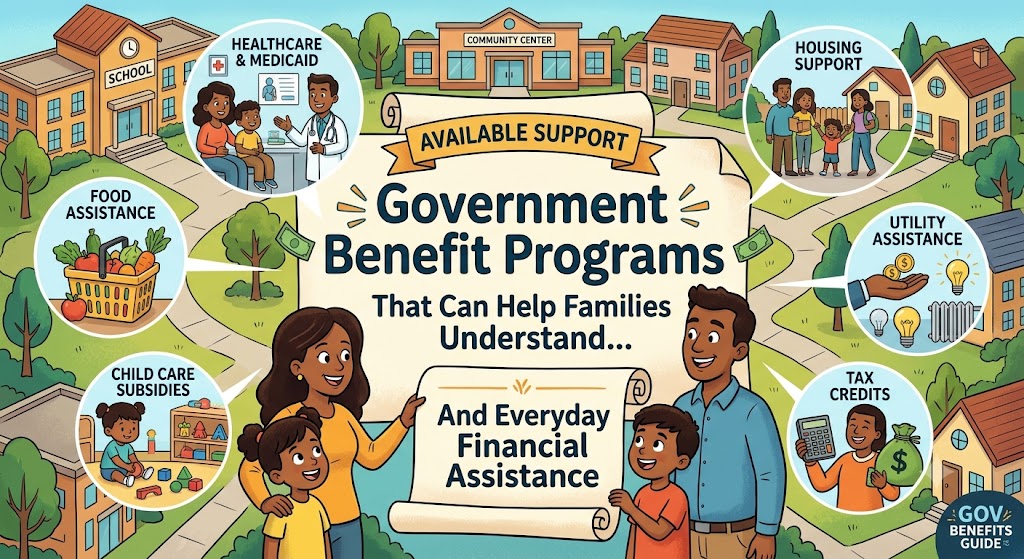
A practical guide to understanding common government support programs, eligibility basics, applications, and responsible benefit planning.
Managing household expenses can become difficult when families face rising food costs, housing expenses, medical bills, childcare needs, education costs, or temporary income changes. Government benefit programs can provide assistance in some of these situations, but understanding what is available is not always easy.
Government support can vary considerably by country, state, income level, household size, age, disability status, employment situation, and other eligibility factors. Programs can also change over time. For that reason, families should use official government information when checking current requirements and application procedures.
Understand What Government Benefits Are Designed to Do
Government benefit programs generally exist to help eligible individuals and families manage specific financial or social needs. Some programs provide direct payments, while others offer food assistance, healthcare coverage, housing support, childcare assistance, tax benefits, or help with education and employment.
Benefits are not necessarily designed to replace a household’s entire income. In many cases, they are intended to reduce a particular financial burden and help families maintain basic stability while they work toward longer-term financial security.
Food and Nutrition Assistance
Food assistance programs can help eligible households manage grocery expenses. Depending on the country and program, assistance may be provided through electronic benefits, vouchers, school meal programs, food packages, or other forms of support.
Families should check household income limits, household-size requirements, residency rules, and other conditions before applying. Some programs are specifically designed for children, pregnant individuals, older adults, or households experiencing financial hardship.
Keeping documents such as income records, identification, household information, and expense information organized can make the application process easier.
Healthcare Assistance
Healthcare costs can place significant pressure on household budgets. Government-supported healthcare programs may help eligible families access medical services, insurance coverage, prescriptions, preventive care, or other health-related assistance.
Eligibility may depend on income, age, household circumstances, disability, employment, or other factors. Some programs may also have different rules for adults and children.
Families should compare the coverage, costs, renewal requirements, and participating providers associated with a program before making decisions about healthcare coverage.
Housing and Utility Support
Housing can represent one of the largest household expenses. Depending on location and eligibility, government assistance may include rental support, subsidized housing, housing vouchers, emergency assistance, or programs designed to help households manage energy costs.
These programs can have waiting lists or limited funding, so families should avoid assuming that assistance will be immediately available. Applying through official channels and keeping contact information updated can help applicants remain informed.
Childcare and Family Support
Families with young children may be able to access programs that reduce childcare costs or provide support for children’s nutrition, education, and development.
Childcare assistance can be particularly valuable for working parents or people participating in education and job-training programs. Requirements can vary depending on household income, employment, children’s ages, and local program rules.
Families should apply through the appropriate government agency or authorized provider and confirm whether the selected childcare provider participates in the relevant program.
Tax Credits and Financial Relief
Some government assistance is delivered through the tax system rather than a traditional benefit application. Tax credits or deductions may reduce a person’s tax liability or, where applicable, increase a refund.
These programs can have detailed eligibility requirements based on income, dependents, filing status, employment, education expenses, or other circumstances.
Families should use current official tax guidance or consult a qualified tax professional when they are uncertain about eligibility. Avoid relying on old articles because tax rules and thresholds can change.
Education and Student Assistance
Government-supported education programs can help eligible students and families manage the cost of higher education, vocational training, or other approved educational programs.
Assistance may include grants, scholarships, student loans, work-study opportunities, or other forms of financial support. Each type of assistance has different conditions.
Students should understand whether assistance needs to be repaid, how interest works when applicable, and what academic or enrollment requirements must be maintained.
Support for Older Adults and People With Disabilities
Some government programs are specifically designed to support older adults or people with qualifying disabilities. Assistance may involve healthcare, income support, transportation, housing, nutrition, or other services.
Eligibility can depend on age, work history, income, disability requirements, or other program-specific conditions. Families helping an older relative should carefully review official requirements rather than assuming that a particular benefit is automatically available.
Unemployment and Employment Assistance
Workers who lose employment may be eligible for unemployment-related assistance depending on their location and work history. These programs can provide temporary income support while an individual searches for another job.
Some employment agencies also provide career counseling, job-search assistance, training programs, resume support, or skills development opportunities.
Because unemployment benefits often involve deadlines and reporting requirements, applicants should read official instructions carefully and submit required information on time.
How to Find Benefits You May Qualify For
The easiest starting point is usually an official government website or local government agency. Families should avoid relying entirely on social media posts, advertisements, or unofficial websites that promise guaranteed assistance.
Useful information to gather:
- Household size and information about dependents
- Recent income and employment records
- Identification and residency documents
- Housing or utility information when relevant
- Existing benefit or case numbers
- Education or childcare information when applicable
Having these details available can make it easier to determine which programs are worth researching and can reduce delays caused by missing documentation.
Apply Through Reliable Sources
Families should apply through official government agencies or authorized organizations whenever possible. Be cautious of websites that request unnecessary personal information or demand payment simply to access a government application.
Before submitting sensitive information, check that the website or organization is legitimate. Keep confirmation details and copies of submitted documents for future reference.
Keep Track of Renewal Dates
Receiving a benefit does not always mean that assistance continues indefinitely. Many programs require periodic renewals, eligibility reviews, or updated information.
Missing a renewal deadline can sometimes interrupt assistance. Families can use a calendar, reminder application, or simple spreadsheet to record important dates.
Changes in income, household size, address, employment, or other circumstances may also need to be reported. Program rules determine which changes must be reported and when.
Avoid Common Benefit Application Mistakes
Small mistakes can sometimes create unnecessary delays. Applicants should read questions carefully, provide accurate information, and submit all requested documents.
Another common mistake is assuming that a family does not qualify without checking current rules. Eligibility thresholds and program policies can change, so it is better to review the latest official information.
Families should also avoid submitting duplicate applications simply because they have not received an immediate response. Instead, they can use the official contact method to check application status.
Frequently Asked Questions
In some cases, yes. Different programs serve different purposes, and eligibility for one program does not necessarily prevent someone from receiving another. However, each program has its own rules.
No. Applications are reviewed according to the requirements of the specific program. Applicants should provide accurate information and all required documentation.
Yes. Income limits, payment amounts, application procedures, and other requirements can change. Always check current information through the relevant official government source.
Review the official program requirements or contact the responsible government agency. If the situation is financially or legally complicated, professional advice may also be appropriate.
Final Thoughts
Government benefit programs can provide valuable assistance to families dealing with everyday financial pressures, but finding the right support requires patience and accurate information. Food assistance, healthcare programs, housing support, childcare help, education assistance, tax benefits, unemployment programs, and support for older adults can each address different household needs.
The most practical approach is to start with official information, understand eligibility requirements, prepare documents carefully, and keep track of deadlines and renewal dates. Families should also remember that receiving assistance is not something to be embarrassed about. These programs exist to provide support to eligible people during particular circumstances.
By staying organized and checking current requirements rather than relying on outdated information, households can make better-informed decisions about the financial assistance that may be available to them.