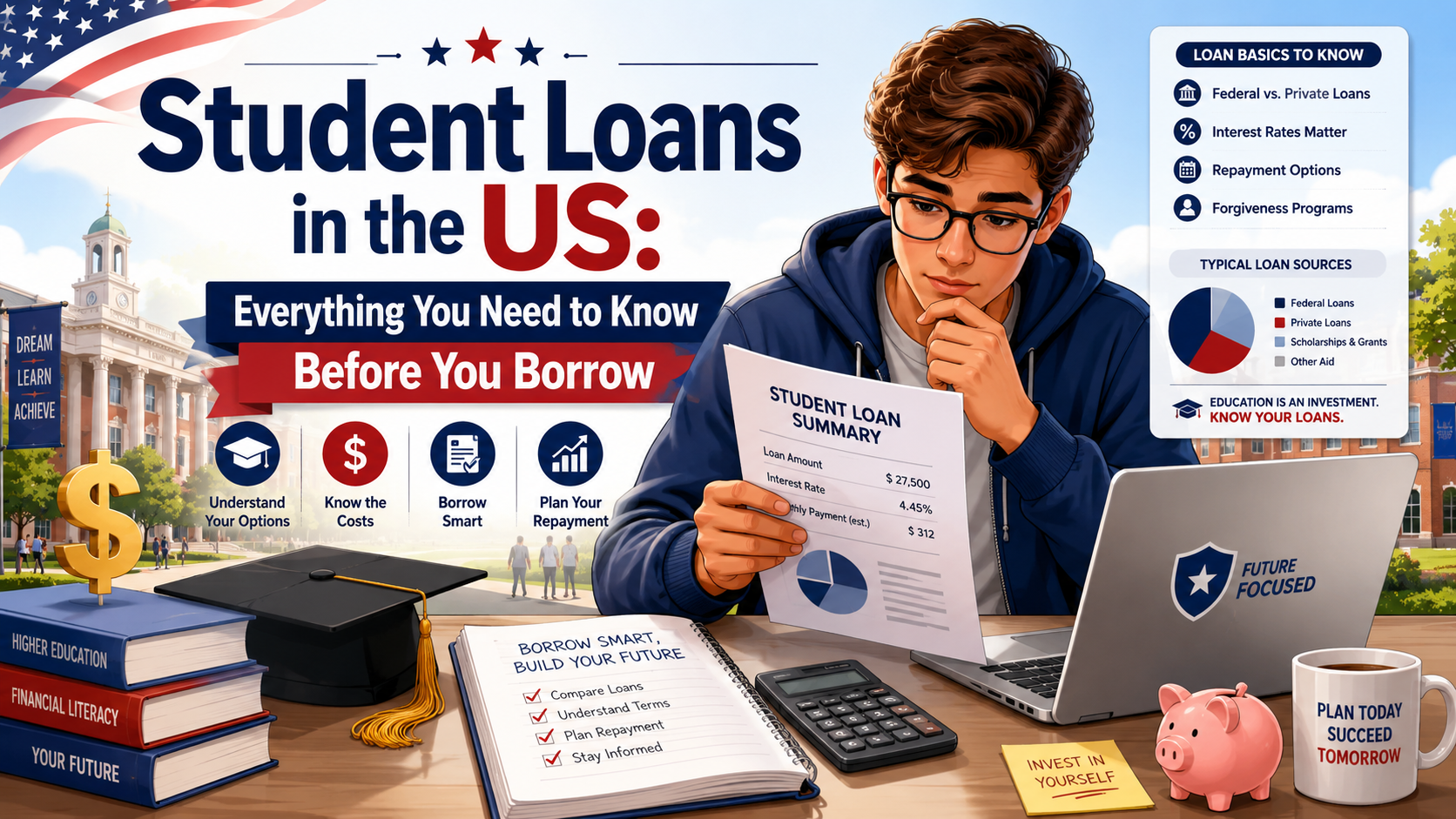
College in America is one of the most important investments many students will ever make — but the price can be difficult to cover out of pocket.
That is where student loans come in. The problem is that many students borrow first and understand later, usually when the first bill appears after graduation.
This guide explains how student loans work, what types exist, how repayment works, and how to avoid the mistakes that cost borrowers thousands.
🎓 What Is a Student Loan?
A student loan is money borrowed to pay for college expenses such as tuition, housing, textbooks, meal plans, and other education-related costs.
Unlike scholarships or grants, student loans must be repaid with interest. Interest is the real cost of borrowing, and it can grow quickly if you are not careful.
Example: Borrowing $30,000 at 6% interest could mean paying back more than $40,000 over time. That extra amount is the cost of the loan itself.
⚖️ Federal Loans vs. Private Loans
Federal Student Loans
- ➤ Fixed interest rates
- ➤ Income-driven repayment options
- ➤ Possible forgiveness programs
- ➤ No credit check for most loan types
- ➤ Deferment and forbearance options
Private Student Loans
- ➤ Credit check usually required
- ➤ Variable rates may increase
- ➤ Fewer repayment protections
- ➤ No federal forgiveness programs
- ➤ Less flexibility during hardship
Rule to remember: Always use federal loans first. Only consider private loans after grants, scholarships, work-study, savings, and federal options are not enough.
🏛️ Types of Federal Student Loans
| Loan Type | Who It Is For | Interest While in School |
|---|---|---|
| Direct Subsidized Loans | Undergraduate students with financial need | Government pays the interest while eligible |
| Direct Unsubsidized Loans | Undergraduate and graduate students | Interest builds from the day you borrow |
| Direct PLUS Loans | Graduate students and parents | Interest builds from the day you borrow |
| Direct Consolidation Loans | Borrowers with multiple federal loans | Combines multiple loans into one payment |
💰 How Much Can You Borrow?
Federal loans have annual borrowing limits based on your school year and student status. Private loans may allow higher borrowing, but that does not mean borrowing more is wise.
- ➤ Freshmen: Up to $5,500 per year
- ➤ Sophomores: Up to $6,500 per year
- ➤ Juniors and seniors: Up to $7,500 per year
- ➤ Graduate students: Up to $20,500 per year in unsubsidized loans
✅ Smart Student Loan Checklist
- File the FAFSA every year
- Use scholarships and grants before loans
- Choose federal loans before private loans
- Borrow only what you truly need
- Understand your interest rate
- Know your loan servicer
- Use your grace period wisely
- Ask for help before missing payments
💳 Repaying Your Student Loans
Most federal loans include a six-month grace period after graduation before payments begin. After that, you choose a repayment plan based on your income, budget, and goals.
| Repayment Plan | How It Works | Best For |
|---|---|---|
| Standard Repayment | Fixed payments over 10 years | Borrowers who can afford higher monthly payments |
| Income-Driven Repayment | Payments based on income and family size | Borrowers with lower or unstable income |
| Graduated Repayment | Payments start low and increase over time | Borrowers expecting income growth |
| Extended Repayment | Payments spread over a longer period | Borrowers who need lower monthly payments |
✅ Student Loan Forgiveness Programs
- ➤ Public Service Loan Forgiveness: For qualifying government and nonprofit workers after 120 qualifying payments.
- ➤ Teacher Loan Forgiveness: For eligible teachers at qualifying low-income schools.
- ➤ Income-Driven Forgiveness: Remaining balance may be forgiven after 20–25 years of qualifying payments.
⚠️ 5 Mistakes That Cost Borrowers the Most
- ➤ Borrowing more than you actually need
- ➤ Ignoring interest while still in school
- ➤ Not filing the FAFSA every year
- ➤ Wasting the six-month grace period
- ➤ Not knowing your loan servicer
❓ Frequently Asked Questions
What credit score do I need for a student loan?
Most federal student loans do not require a credit score. Private lenders usually look for good credit or a co-signer.
Can I get a student loan without a co-signer?
Yes. Federal loans do not require a co-signer. Private loans may require one if you do not have enough credit history.
What happens if I cannot make payments?
Contact your loan servicer immediately. Federal loans may offer income-driven repayment, deferment, or forbearance options.
Is student loan interest tax deductible?
In many cases, yes. You may be able to deduct up to $2,500 in student loan interest depending on income limits.
How long does it take to pay off student loans?
The standard plan takes 10 years. Income-driven plans may last 20–25 years before forgiveness.
✅ Final Thoughts
Student loans are not automatically bad, but borrowing without understanding them can create long-term financial stress.
Start with the FAFSA, use federal loans first, borrow only what you need, and know your repayment options before graduation. Your education is worth it — just make sure the debt does not control the next decade of your life.